

[ad_1]
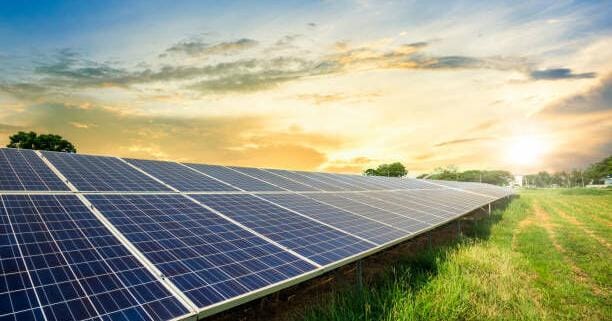
It’s an issue that has divided communities and stymied lawmakers: Virginia’s transition to wash vitality relies on constructing 1000’s of acres price of enormous photo voltaic services, however a backlash from some Rural neighbors make initiatives tougher.

Most of the objections are aesthetic – some individuals need to take a look at rows of photo voltaic panels once they’ve been having fun with a bucolic nation panorama – however different opponents have as they’re frightened concerning the lack of fields and bushes. Solar, they concern, is unhealthy for the earth in addition to the eyes. It did not assist that a few of the early growth of the day suffered from nook reducing leading to soil erosion and erosion. If that is photo voltaic, lots of people need no a part of it.
In 2022, land conservation teams are becoming a member of agricultural and logging pursuits to foyer for laws that will require mitigation if a photo voltaic challenge disturbs greater than 50 acres of forest or 10 acres of ” prime agricultural lands.” House Bill 206 applies to any photo voltaic. challenge developed below Virginia’s sort-of-streamlined “permit by rule†course of, out there to all however the largest services.
People additionally learn…

Ivy Main
The photo voltaic business initially fought the regulation, joined by some local weather advocacy teams. They level out that no different business is topic to mitigation necessities, and that photo voltaic offers better local weather advantages than forestry and agriculture. Additionally, the photo voltaic panels might be eliminated and the land returned to farming or forestry. Conversely, as soon as the land turns into a housing subdivision or strip mall or information middle, the harm is everlasting.
The photo voltaic business finally accepted compromise language that delayed the efficient date till early 2025 and gave business members a voice on an advisory panel below the auspices of Virginia’s Department of Environmental Quality (DEQ). The regulation mandates this group to assist develop “standards to find out whether or not a major adversarial impact on prime agricultural lands or forest lands is prone to happen on account of a proposed growth.” photo voltaic challenge,†and if that’s the case, the actions that have to be taken. thought-about in any mitigation plan. DEQ makes use of the working group’s conclusions to develop laws.
As it seems, the working group could be very small. Its 717-page report discovered consensus on just a few factors, leaving DEQ alone with the duty of addressing key points. On May 13, the company revealed proposed laws. The laws are presently below govt department evaluate, after which events and the general public can have a possibility to remark.
Meanwhile, a number of issues have occurred because the passage of HB 206.
In March of 2022, the DEQ strengthened stormwater laws to deal with runoff and erosion issues which have given photo voltaic a nasty title in some communities. Based on that, the company just lately launched a brand new stormwater handbook that can be efficient July 1, 2024, with sections particular to photo voltaic growth.
Some members of the photo voltaic business complain that the DEQ’s stormwater laws are unreasonably burdensome, however nobody doubts the significance of stopping runoff and erosion. In any case, many corporations are already utilizing earth-friendly strategies that make it simpler to satisfy the more durable guidelines. One is using terrain following trackers, a know-how that permits photo voltaic to be put in on uneven floor as an alternative of bringing in bulldozers to stage the positioning. Trackers maximize photo voltaic manufacturing in hilly areas whereas preserving topsoil and vegetation.
The new tracker know-how is one among a set of low-impact strategies gaining floor because the photo voltaic business matures. The DEQ encourages one other eco-friendly observe: planting native species between and round photo voltaic arrays. Native crops present meals and shelter for bugs whose numbers have declined in recent times, threatening our ecosystem. Although solely a handful of photo voltaic initiatives have achieved DEQ’s pollinator-smart certification thus far, most builders I’ve spoken with say they’re open to it.
Gaining traction sooner is the observe of utilizing grazing animals for crop administration. The sheep hit the candy spot: the challenge house owners lower your expenses they might in any other case spend on the individuals working the equipment, whereas the sheep thrive within the shade of the photo voltaic panels and return the soil vitamins. Already, 2% of US sheep are grazed below photo voltaic panels, in accordance with a webinar by the American Solar Grazing Association, together with a number of giant services in Virginia that energy Dominion Energy. Elsewhere, cows graze below photo voltaic panels or crops develop between rows, additional blurring the excellence between photo voltaic services and agricultural use.
All-terrain tracker, topsoil preservation, native crops and embrace energetic farming or grazing: all these practices make sure that the farm doesn’t “lose” the photo voltaic. Yet the DEQ’s more durable stormwater guidelines, the photo voltaic business’s more durable practices, and even the passage of HB 206 haven’t allayed the issues of photo voltaic opponents. However, rural counties have elevated the tempo of restrictions, caps and moratoriums.
One suspects that the continued hostility is just not as a result of opponents lack data of the way photo voltaic might be environmentally pleasant, however as a result of the opposition’s main motivation is just not farm preservation. If all they care about is stopping photo voltaic from spreading throughout the panorama (“preserving our rural heritage†is the euphemistic framing), then including a brand new layer of mitigation necessities will not change something. no matter.
Admittedly, I by no means supported HB 206 within the first place. From an environmental perspective, photo voltaic is not any worse for the earth than monoculture pine plantations or merchandise grown with pesticides and petroleum-based fertilizers. Made in an environmentally pleasant means, photo voltaic can enhance biodiversity and assist restore the soil. And photo voltaic solutions our CO2 downside, greater than bushes.
However, the DEQ’s job is to attempt to discover a center floor between the photo voltaic business and its detractors, and to be honest, their efforts have gotten some issues proper. The proposed guidelines acknowledge that there are levels of impression {that a} photo voltaic facility can have, and that practices reminiscent of leaving topsoil undisturbed or incorporating agrivoltaics needs to be rewarded. of decrease mitigation necessities. A neat desk illustrates the totally different ranges of impression and suggests totally different ranges of mitigation for matching. Mitigation normally takes the type of land set-asides, however will also be happy by per-acre funds.
And but the proposal misses the mark on not less than three fronts. First, it fails to provide full credit score to photo voltaic initiatives that scale back land disturbance and embrace agrivoltaics. DEQ ought to acknowledge that adopting greatest practices is mitigation itself, which ought to keep away from the necessity for land set-asides or financial funds.
Second, the proposed laws make no exceptions for initiatives owned and operated by native farmers who incorporate photo voltaic into their farm actions to extend and diversify their revenue unnecessarily. to promote their land. If the purpose of HB 206 is to guard farming, the DEQ misses the mark.
Finally, the greenback quantity DEQ is proposing in lieu of land set-aside is just too excessive, with dire penalties. A photo voltaic firm that should pay a heavy penalty should cross that value on within the type of a better worth for the electrical energy produced. If a utility has to pay extra for electrical energy, taxpayers find yourself footing the invoice.
The different is equally counterproductive. I famous on the outset that DEQ’s permit-by-rule course of is out there for all however the largest initiatives, however it isn’t the one path open to builders. Projects over 150 MW are required to go to the SCC for approval, however smaller initiatives is not going to be foreclosed from doing so. If the DEQ makes its personal course of too onerous, photo voltaic builders will go to the SCC. The SCC requires {that a} developer receive a neighborhood allow, however not that it makes use of soil-saving practices, agrivoltaics or mitigation.
It can be nice if the DEQ may flip HB 206 into lemonade in a photo voltaic business that adopts eco-friendly growth strategies and contains pollinator crops, sheep grazing, and different companies in agriculture. What we’ve got as an alternative is a proposal that might kill the permit-by-rule program with out benefiting anybody – in impact, turning lemonade into lemons.
There remains to be time to appropriate. The DEQ could not resolve the photo voltaic wars, however a sound set of laws will place Virginia to make the most of a photo voltaic business that’s very important to our future.
Ivy Main is an lawyer and longtime volunteer on the Sierra Club’s Virginia chapter. A former worker of the US Environmental Protection Agency, he’s presently the renewable vitality chairperson of the Sierra Club. His opinions are his personal and don’t essentially replicate these of any group.
[ad_2]
Source link