
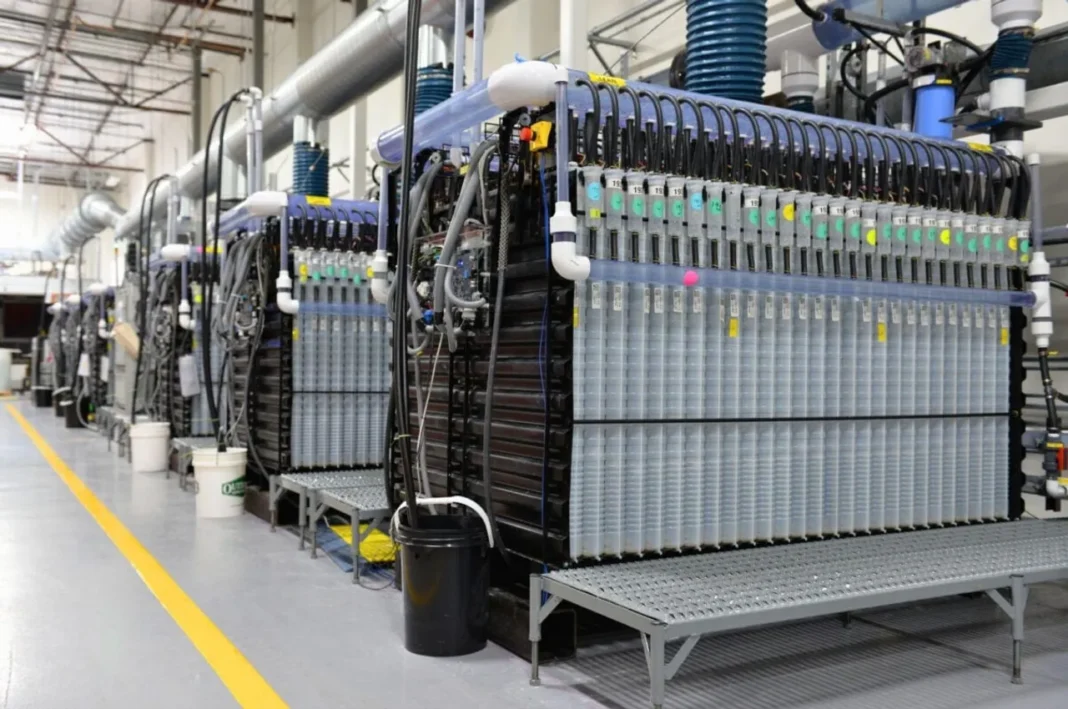

Minnesota, US — Google is backing one of the largest battery energy storage projects ever announced, committing to a 30GWh iron-air battery system to support a new data center in Pine Island, Minnesota.
The system will be supplied by Form Energy under an energy agreement with utility provider Xcel Energy. If approved by regulators, the project would deliver 300MW of capacity and up to 100 hours of continuous energy storage.
The move highlights how major technology companies are reshaping energy infrastructure to meet rising AI-driven electricity demand.
A Battery Built for the AI Era
Unlike conventional lithium-ion systems that typically provide 4–8 hours of storage, Form Energy’s iron-air technology is designed for multi-day discharge.
The chemistry uses iron, air, and water in a reversible oxidation process to store electricity at lower material costs than lithium-based batteries. The result is long-duration storage capable of stabilizing renewable-heavy grids during extended periods of low wind or solar output.
At 30GWh of energy capacity, the project ranks among the largest battery announcements globally.
To know more about Long Duration Energy storage Visit Sunlith Energy
1.9GW of Clean Energy Expansion
The agreement also includes significant renewable additions:
- 1,400MW of wind generation
- 200MW of solar capacity
- $50 million investment in grid reliability programs
Together, the package totals nearly 1.9GW of clean energy resources.
According to Xcel Energy, Google will fund the necessary infrastructure upgrades, preventing cost impacts on existing customers.
The agreement will be reviewed by the Minnesota Public Utilities Commission before final approval.
Why This Matters for Tech Infrastructure
Data centers powering artificial intelligence, cloud computing, and digital services are rapidly increasing electricity demand across the United States.
Rather than relying solely on renewable energy credits, major tech firms are now investing directly in generation and long-duration storage assets to secure reliable, low-carbon power.
Industry analysts say multi-day storage systems like iron-air batteries could become critical as grids integrate higher shares of intermittent renewable energy.
The Bigger Shift
Google’s Minnesota deal signals a broader transformation:
AI growth is no longer just a computing challenge — it’s an energy infrastructure challenge.
As hyperscale data centers expand, partnerships between technology companies and utilities may increasingly include large-scale battery deployments to ensure grid reliability and long-term sustainability.